Reticulated Python Leather: Diamond Scale Topography & Supple Tanning Methods
Executive Technical Summary: Reticulated Python Leather: Diamond Scale Topography & Supple Tanning Methods
This authoritative whitepaper provides an engineering and craftsmanship deep-dive into the material science, tanning chemistry, and international trade compliance of premium exotic leathers at Ngoc Son Tannery. Designed for luxury brands, master cordwainers, and bespoke leather ateliers.
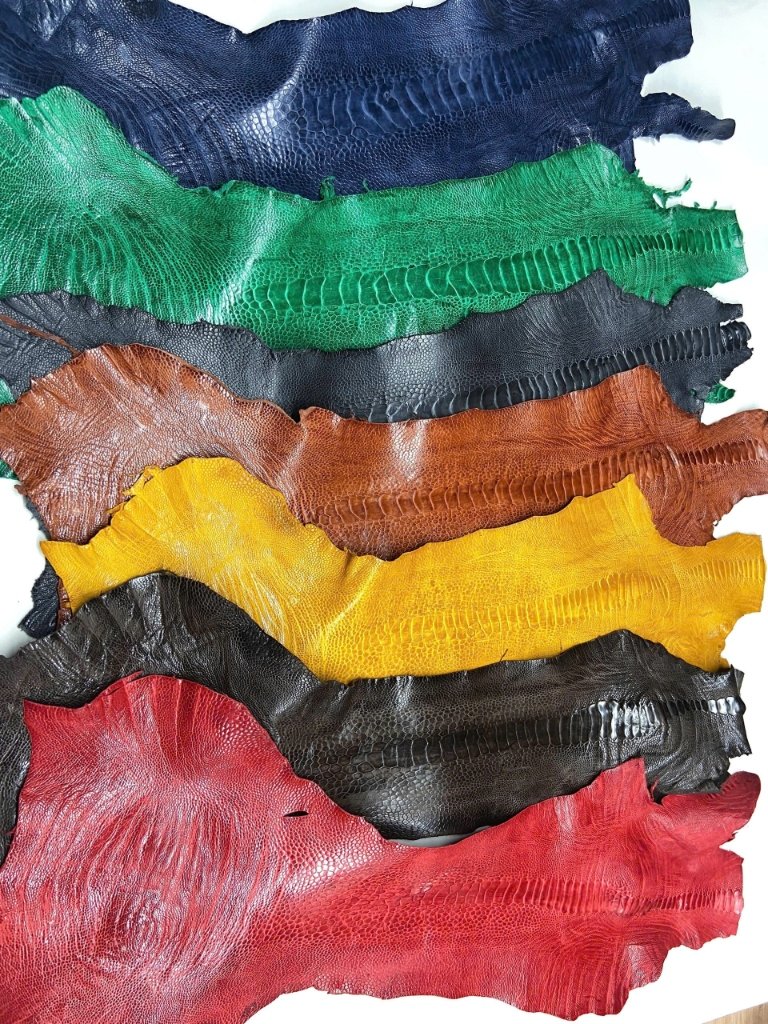
Renowned for its mesmerizing geometric diamond patterns and gossamer-soft drape, Reticulated Python (Malayopython reticulatus) offers designers unparalleled versatility for high-fashion garments, clutches, and custom footwear.
Technical Specifications & Compliance Matrix
1. Front Cut vs. Back Cut: Aesthetic Differences
A **Back Cut** opens along the spine, displaying the broad, rectangular ventral belly scales along the middle line. This cut delivers architectural symmetry preferred for structured clutches and bespoke footwear.
2. Bleached Natural Patterns vs. Solid Dyeing
Our specialized enzyme wash stabilizes individual scales, preventing scale curling or lifting over extended handling while retaining silky tactile suppleness.
3. Lining and Backing Reinforcement Strategies
Frequently Asked Procurement Questions
How do you prevent python scales from flaking or peeling over time?
Our conditioning formula infuses natural animal lipids that maintain microscopic scale flexibility, preventing dehydration-induced scale lifting.
What is the average yield from a 3.5-meter python hide?
A single 3.5m hide typically yields 4 to 6 medium clutch bags or multiple pairs of bespoke sneakers and belt wraps.
Partner with Ngoc Son Tannery for Direct Wholesale & OEM Orders
We supply CITES-certified crocodile bellies, ostrich skins, and reticulated python hides directly to global luxury brands, watch strap ateliers, and bespoke footwear craftsmen worldwide.
Four-Quadrant Flaw Inspection Standard
Scrutinized under 1,000 Lux daylight illumination for needle pinholes, natural bite marks, and parasite scratches. Grade I requires 100% flaw-free symmetry for front bag panels.
Inspecting scale regularity and transition smoothness. Allows micro-healed marks in peripheral zones (Grade II) suitable for base panels and side gussets.
Grading Tiers & Yield Optimization Specifications
| Grading Tier | Defect Tolerance | Optimal Luxury Application | Cutting Yield |
|---|---|---|---|
| Grade I | 0 flaws across all 4 quadrants | Birkin/Kelly style front & flap panels | 82% – 88% |
| Grade II | 1 minor flaw in 1 quadrant | Medium handbags, shopper totes, shoes | 72% – 78% |
| Grade III | Flaws in 2 quadrants | Small leather goods (SLG), wallets, belts | 58% – 65% |
| Grade IV | Flaws in 3+ quadrants | Watch straps, patches, contrast inlays | 42% – 50% |
Defect Prevention & Cutting Yield Optimization
During pattern layout, improper tension or misaligned cutting can reduce yield by up to 30%. At Ngoc Son Tannery, our leather specialists inspect hides under 1,000-Lux color-calibrated daylight lamps, categorizing scratch depths, scale regularity, and grain fiber elasticity. We recommend orienting structural panels parallel to the backbone axis to ensure maximum dimensional stability over years of use.
🤝 Connect with Ngoc Son Tannery Atelier
Inquire directly about wholesale hides, low MOQ custom Pantone dyeing (from 2 skins), or CITES export documentation:
Direct WhatsApp: +84 764 245 345
Email: dosonnamanh2571988@gmail.com | ngocsoncasau@gmail.com
Official Fanpage: facebook.com/profile.php?id=100086492093922
东南亚网纹蟒皮(Reticulated Python):钻石几何鳞纹与柔韧鞣制工艺
核心要义与行业背景
本篇技术白皮书深度剖析了玉山皮革工坊在珍稀皮料(暹罗鳄、网纹蟒、南非鸵鸟皮)领域的材料显微科学、精密鞣制化学与国际贸易合规准则,专为全球奢华皮具品牌、高级定制独立工坊及鞋履工匠提供权威实操指引。
🐍 珍稀蟒蛇皮特性:几何之美与触觉魅力
网纹蟒(Malayopython reticulatus)以其标志性的天然几何钻石花纹与天鹅绒般的轻盈触感,长久以来占据高级时装与奢华包袋的关键地位。玉山皮革工坊甄选越南南部合规养殖基地大尺寸原胚。
1. 剖腹(Front-Cut)与剖背(Back-Cut)
剖背皮保留了中央宽阔华丽的腹部宽鳞板,视觉冲击力极强;剖腹皮则展现背部连绵起伏的钻石几何纹理,适合长款风衣、腰带与立体手袋裁片。
2. 独家防翘鳞柔化浸油配方
针对干燥气候下蟒皮鳞片易起翘脱落的行业痛点,玉山皮革采用微乳化深海鱼油复配生物聚合物,深度锁固鳞片基部纤维,确保在-20°C至45°C环境下依旧平整贴服。
🤝 批发选购高定网纹蟒皮与定制对色
供应 25cm – 55cm 全尺寸天然花纹及全脱色漂白净色蟒皮,支持单色 2 张起订:
WhatsApp / 微信: +84 764 245 345
电子邮箱: dosonnamanh2571988@gmail.com
四象限生皮检验与分级规程
在1000勒克斯模拟日光下严密筛查针孔、咬伤及寄生虫划痕。Grade I 头等皮要求全区零瑕疵,专用于手袋主立面。
检验鳞纹走向规律度。Grade II 级允许边缘区域存在微小愈合自然痕迹,适合裁切包底、侧围风琴褶及内衬饰片。
品级分类与开料出材率对照表
| 质量等级 | 瑕疵容许标准 | 推荐奢华应用场景 | 综合出材率 |
|---|---|---|---|
| Grade I (特级) | 四象限全区零刀伤针孔 | 顶级高定手袋主面与正反翻盖 | 82% – 88% |
| Grade II (次级) | 仅单一象限有微小自然痕迹 | 中型托特包、保龄球包、高级皮鞋 | 72% – 78% |
| Grade III (三级) | 两个象限有轻微瑕疵 | 长短钱夹、名片夹、手工皮带 | 58% – 65% |
| Grade IV (四级) | 三个象限以上有明显瑕疵 | 高档表带、拼皮撞色构件、饰边 | 42% – 50% |
瑕疵预防与开料出材率最大化
在开料排版过程中,不当的下刀角度或忽视纤维伸展方向会导致材料损耗高达 30% 以上。玉山皮革技术专家在1000勒克斯色温校准灯下严苛检验每一张皮料的划痕深度、鳞纹排列与纤维弹性,建议工匠严格沿皮板中轴线平行排版,确保成品在数十年使用中历久弥新、身骨挺括。
🤝 玉山皮革业务洽谈与订购支持
欢迎海内外皮具品牌商、手工皮艺师随时沟通询价,支持小批量潘通对色(2张起订)与全套出口报关协助:
WhatsApp / 微信直通: +84 764 245 345
电子邮箱: dosonnamanh2571988@gmail.com | ngocsoncasau@gmail.com
官方主页: 玉山皮革官方 Facebook 页面